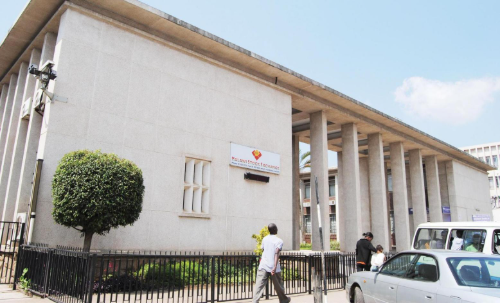
The Malawi Stock Exchange was Africa’s best-performing stock exchange in 2025. A 248% nominal gain. Market capitalisation that exceeded 111% of nominal GDP. The CEO of the exchange, John Kamanga, confirmed that trade turnover surged 183.9% to MK 329.5 billion during the year.
The headline was real. The story beneath it was more complicated — and 2026 is revealing that complexity.
The Inflation Premium
Malawi’s inflation ran above 30% for much of 2025.
When a currency loses purchasing power at that rate, all nominal asset prices rise mechanically — shares included. A company whose operations, competitive position, and revenue streams stayed flat still appears to be worth substantially more in kwacha terms. A bank earning high nominal interest on government Treasury bills posts spectacular kwacha profits. The exchange denominated in kwacha prints exceptional returns.
Nominal returns and real returns are not the same thing. In a 30%-inflation environment, a 248% nominal gain represents roughly a 167% real gain — still exceptional, but a very different number. Investors who understand this distinction make money in high-inflation markets. Those who read the headline number as face value do not.
The 2026 Correction: What the Data Shows
The reversal began early in 2026 and has continued through Q2.
In January 2026, total share value traded fell 45.58% — from MK 15.38 billion in December 2025 to MK 8.37 billion. Market capitalisation peaked around MK 30.6 trillion in April 2026 and has fallen to MK 27.3 trillion by June 9 — a 10.8% compression in two months. On June 11, 2026 specifically, trading volume fell 87% and turnover fell 91% compared to the previous session.
EmpowerX Consult, a Malawian financial analysis firm, has described the decline as “worrisome but a natural market occurrence following the exchange’s exceptional gains in 2025.” That characterisation is accurate in both directions: worrisome because the liquidity contraction is sharp, and natural because markets that rise 248% in a year do not proceed smoothly upward.
At a price-to-earnings ratio of 21.8x (June 9, 2026), the market is priced for earnings growth the underlying economy has not yet delivered. IMF-projected real GDP growth of 2.2% in 2026, against still-elevated inflation of 24.4%, does not justify PE multiples more commonly associated with high-growth technology markets.
What the Correction Reveals
The companies that will hold their value through this consolidation are those with genuine competitive advantages that exist independently of the inflation backdrop: export revenues denominated in foreign currency, genuine pricing power in domestic markets, or strong recurring demand regardless of macro conditions.
Banks with high Treasury bill income will see earnings compress as nominal interest rates normalise alongside inflation. Companies with kwacha revenues and dollar-linked input costs face margin pressure as the inflationary tailwind fades. These are predictable dynamics — but only for investors who separated real value from inflation premium when they entered.
The Structural Opportunity the Correction Creates
Here is what the correction does not change: the MSE’s 248% gain, however inflation-driven, placed Malawian equity markets on the radar of African and global investors who had never examined them before.
That investor attention does not disappear during a correction. It waits for valuations to clarify, then re-enters with more discipline. If macroeconomic reforms progress — as the World Bank’s return as a budget support provider suggests — the medium-term trajectory for the MSE is positive, even if the next 12 months involve continued consolidation around the 24,000–25,000 level that analysts have modelled.
For entrepreneurs considering a future listing: a market that just demonstrated it can generate serious investor attention is a better starting point than one that has never tried. The exchange is deepening — that is real, and it creates genuine exit options for private businesses.
The smart money does not chase the rally. It arrives early, holds through the correction, and is positioned when everybody else finally arrives.