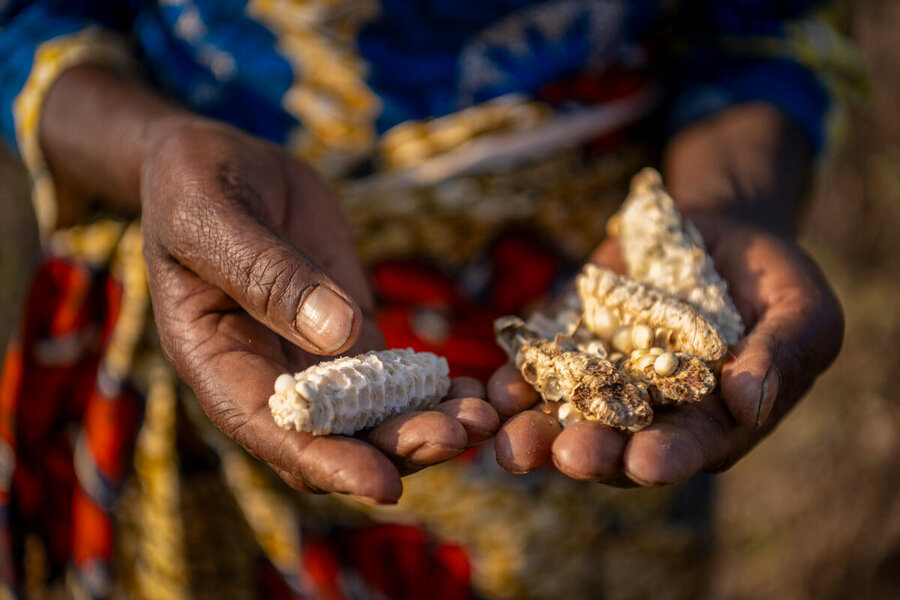
4 million Malawians are expected to face hunger in the 2025/26 consumption period. That is 22% of the country’s projected population. The government’s response is a programme first designed in 2005.
The 2025/2026 Farm Input Subsidy Programme targets 1.1 million farming households. Each receives two 50kg bags of subsidised fertiliser and a 5kg pack of seed of their choice. President Mutharika launched the programme in Mchinji District.
The question is not whether FISP is being delivered. The question is whether twenty years of FISP is delivering Malawi out of food insecurity — and the evidence is increasingly uncomfortable.
What Twenty Years of Data Shows
FISP launched in 2005/06 and produced real results. Maize production increased, food security improved, and Malawi briefly became a regional food exporter. The programme was cited internationally as a model.
But yield and production improvements stalled after 2009. Research from CGIAR, the FAO, and multiple academic institutions documents a consistent finding: maize yields have been stuck at approximately 2 tonnes per hectare for fifteen years despite sustained subsidy spending. Fertiliser subsidies improve yields in the short term, but without market development, irrigation infrastructure, improved seed varieties beyond basic maize, and better post-harvest storage, farmers hit a productivity ceiling. The subsidy keeps them at the ceiling rather than helping them break through it.
In 2025, Malawi produced 2.9 million metric tonnes of maize against a national requirement of 3.6 million — a 600,000 tonne deficit. That deficit triggers food imports. Imports consume foreign exchange. Foreign exchange pressure drives the kwacha lower. Kwacha weakness fuels inflation. Inflation erodes the purchasing power of the farmers the subsidy is meant to protect. The cycle is self-reinforcing.
The Budget Contradiction
The 2025/26 national budget cut FISP’s allocation by 54%.
This creates an immediate arithmetic problem. A programme targeting 1.1 million households, cut by more than half in funding. Either the target contracts sharply, the per-household package shrinks below what creates meaningful impact, or the gap is covered by sources that are not yet confirmed. Food security experts publicly warned in December 2025 that delays in input delivery were a “catalyst for hunger.” Those delays were already materialising before the season started.
Corruption remains a documented, recurring failure point. CISANET — the Civil Society Agriculture Network — is actively monitoring the 2025/26 cycle specifically because irregular beneficiary selection, procurement irregularities, and distribution leakage have been documented across multiple previous cycles. The programme’s integrity challenges are not new. They persist.
What Malawians Are Actually Saying
Afrobarometer research — nationally representative, systematic public opinion data — shows that a strong majority of Malawians favour a different model: providing agricultural inputs through loans via farmers’ clubs rather than direct government subsidy.
This is not an academic preference. It is a practical one grounded in experience.
Loans through community structures create accountability. Farmers who borrow to buy inputs have direct incentive to use them well and repay. That accountability loop does not exist in a subsidy system. Community-based models also reduce the structural opportunity for the political manipulation of beneficiary lists — a problem that has been central to FISP’s governance failures across administrations.
The AfDB has structured investments in Malawi’s agricultural value chains scheduled to yield returns in 2026. The global direction in agricultural development is toward market linkages, irrigation systems, crop diversification, and post-harvest infrastructure — not deeper dependency on a single fertiliser subsidy.
The Business Opportunity in the Gap
The food security crisis is simultaneously a market gap.
A 600,000 tonne maize deficit creates commercial demand for warehouse operators, commodity traders, agri-finance providers, and logistics businesses. The 1.1 million households FISP is attempting to reach are the same 1.1 million households that commercial input suppliers, output buyers, and financial service providers need to reach.
Post-harvest losses in Malawi remain high — between 10% and 20% of production by most estimates. Cold storage, hermetic storage bags, and rural warehousing are commercially viable businesses in a country where 22% of the population is food insecure. These are not charity propositions. They are market-rate opportunities in a sector with chronic undersupply of commercial services.
The businesses that build sustainable economics for smallholder farmers — input finance, market linkages, output aggregation — will be more durable contributors to food security than any annual subsidy cycle.
The most durable food security strategy is the one that makes farmers commercially viable. Not the one that makes them dependent on next year’s government budget.